2 Jul 2026
Tracing Capital Allocation in Reward Systems: Entry Rewards Leading to Elite Acknowledgments

Companies allocate budgets for employee rewards by starting with modest entry-level incentives such as spot bonuses and gift cards, then channeling portions of those funds into layered programs that culminate in executive stock grants and industry awards, with data from the U.S. Bureau of Labor Statistics showing consistent patterns in how organizations distribute compensation resources across workforce tiers.
Entry-Level Incentive Structures
Entry-level incentives typically include performance-based cash awards averaging between 2 and 5 percent of base salary for new hires, while organizations direct these initial outlays through automated payroll systems that track participation rates and redemption frequencies. Researchers at the Society for Human Resource Management have documented how these foundational rewards often represent 15 to 20 percent of total annual compensation budgets in mid-sized firms, creating measurable pathways for fund movement as employees meet milestone criteria. Data indicates that firms using digital platforms for incentive distribution report higher utilization rates, with funds flowing from general operating accounts into dedicated reward pools within the first quarter of each fiscal year.
Budget Origins and Initial Disbursements
Funding for entry-level incentives originates from departmental operating expenses and human resources allocations, yet organizations frequently earmark specific percentages during annual planning cycles that begin as early as the prior July. According to figures released by the Australian Fair Work Ombudsman in mid-2026, approximately 68 percent of surveyed businesses set aside fixed amounts for onboarding rewards before expanding those commitments based on retention metrics collected over six-month periods.
Progression Mechanisms in Mid-Tier Programs
Once entry-level incentives establish engagement baselines, companies redirect portions of unspent reward funds into mid-tier loyalty structures that incorporate team-based bonuses and skill development stipends, with transitions occurring through performance review cycles that integrate data from multiple departments. Observers note that this movement often involves reallocating 30 to 40 percent of original incentive pools into programs offering cumulative benefits such as additional paid time off or professional certification reimbursements. Studies from the European Foundation for the Improvement of Living and Working Conditions reveal that organizations maintaining transparent tracking systems achieve smoother fund escalations, reducing administrative overhead by connecting lower-level payouts directly to eligibility for enhanced recognition tiers.
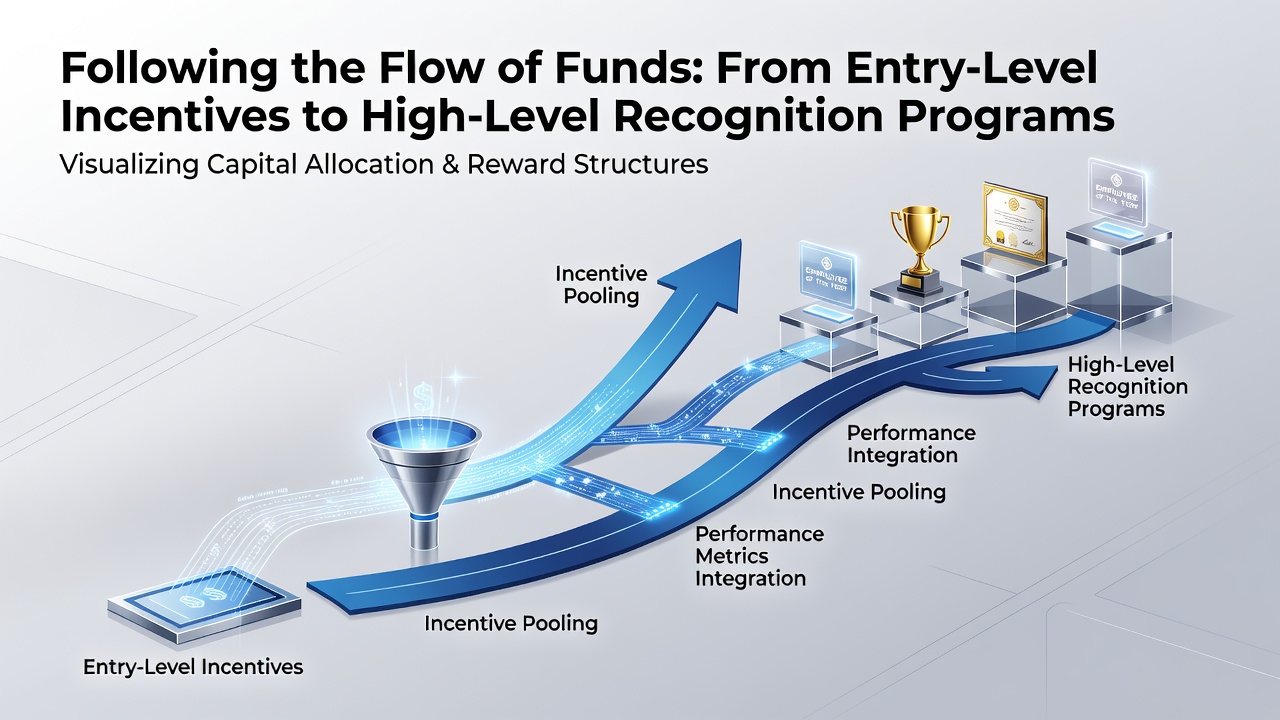
Take one manufacturing firm that tracked incentive expenditures across three consecutive years and discovered that reallocating mid-level funds into cross-training initiatives produced measurable increases in promotion rates from entry positions. Those who've studied these patterns at scale report that such progressions depend on clear criteria tied to both individual output and departmental performance indicators, allowing capital to shift without disrupting overall payroll integrity.
High-Level Recognition and Executive Programs
High-level recognition programs draw from accumulated incentive reserves to fund equity awards, leadership development opportunities, and public accolades that extend beyond monetary value, with capital flows becoming more complex as they incorporate long-term vesting schedules and external benchmarking data. Figures from industry analyses show that top-tier allocations can represent up to 25 percent of total reward expenditures in large corporations, often sourced from returns generated by earlier program efficiencies. What's significant is how organizations integrate these upper tiers through governance committees that review aggregated data from all preceding levels before authorizing disbursements.
Yet the connections between levels remain interdependent, because entry-level participation data frequently informs the design of executive recognition criteria, creating closed-loop systems where initial investments support the infrastructure for premium acknowledgments. Researchers have observed that firms in sectors such as technology and finance demonstrate the most pronounced escalations, with fund movements documented through quarterly audits that highlight retention impacts across the entire employee spectrum.
Conclusion
Capital movement from entry-level incentives to high-level recognition programs follows structured pathways defined by performance thresholds, budget planning cycles, and cross-departmental reporting requirements, with external data sources confirming that organizations achieve measurable outcomes when maintaining consistent allocation frameworks. Patterns documented through regulatory and research bodies underscore the role of technology in facilitating these transitions while preserving accountability at every stage.